
Electric Weeding in Vineyards | Powered by Zasso
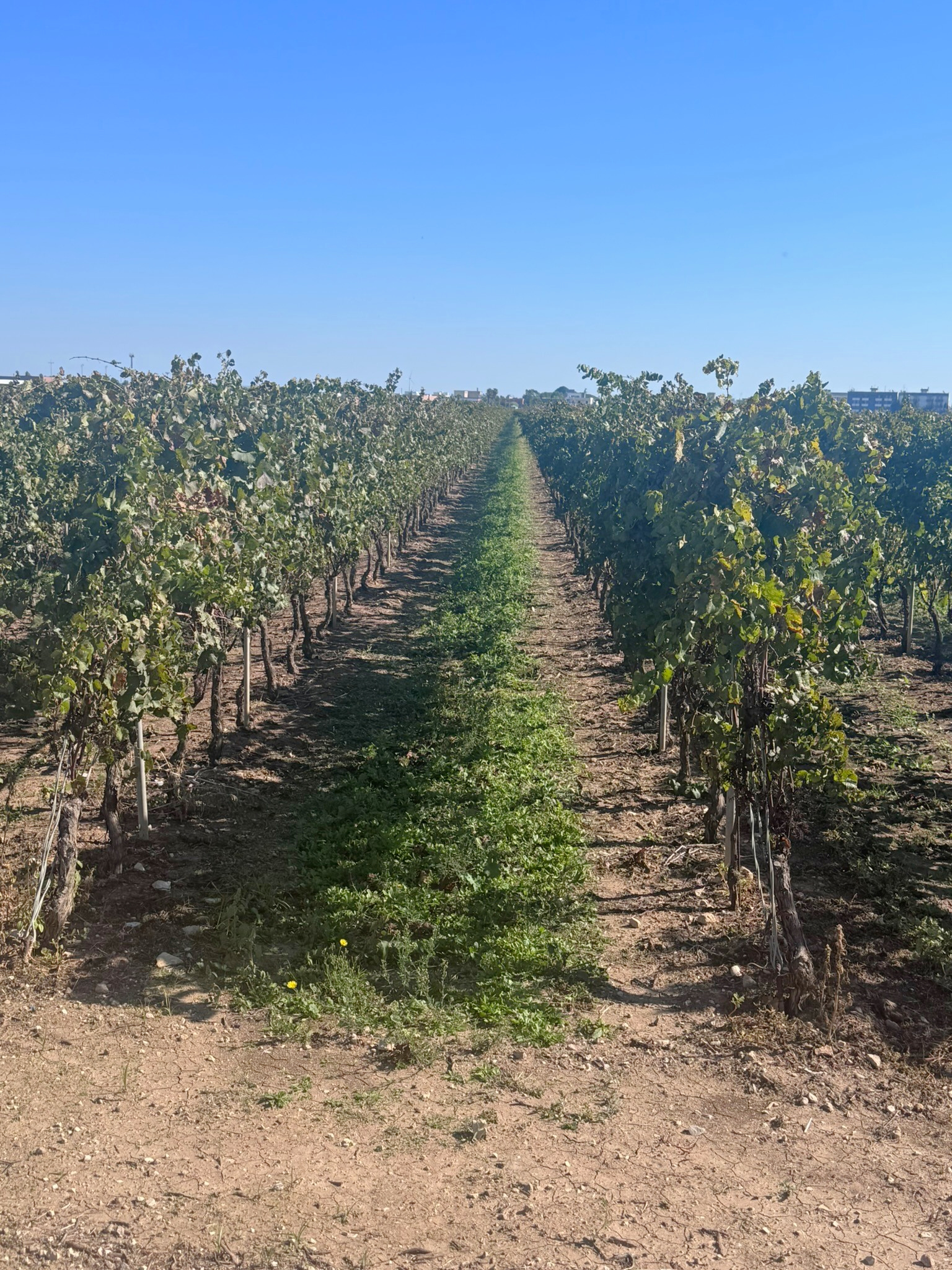
In the vineyards of Puglia, Italy, the XPS, an electric weeding system powered by Zasso, is at work where herbicides and mechanical tools reach their limits.
There is no spray tank and no blade turning the soil. As the XPS electric weeding system, powered by Zasso, moves along the vine row, its electrodes touch the weeds and an electric current travels through each plant, down to the roots, and back to the machine. The photos from this vineyard in Puglia, Italy, show the result: dried-out weeds along the row, including species that are normally difficult to control.
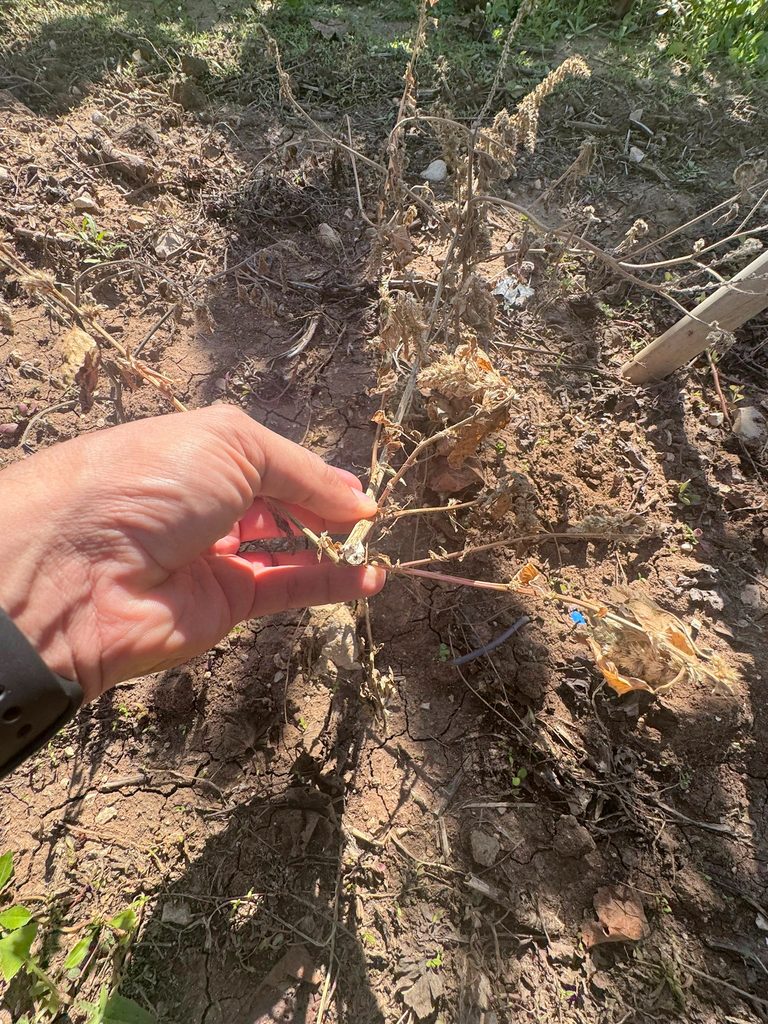
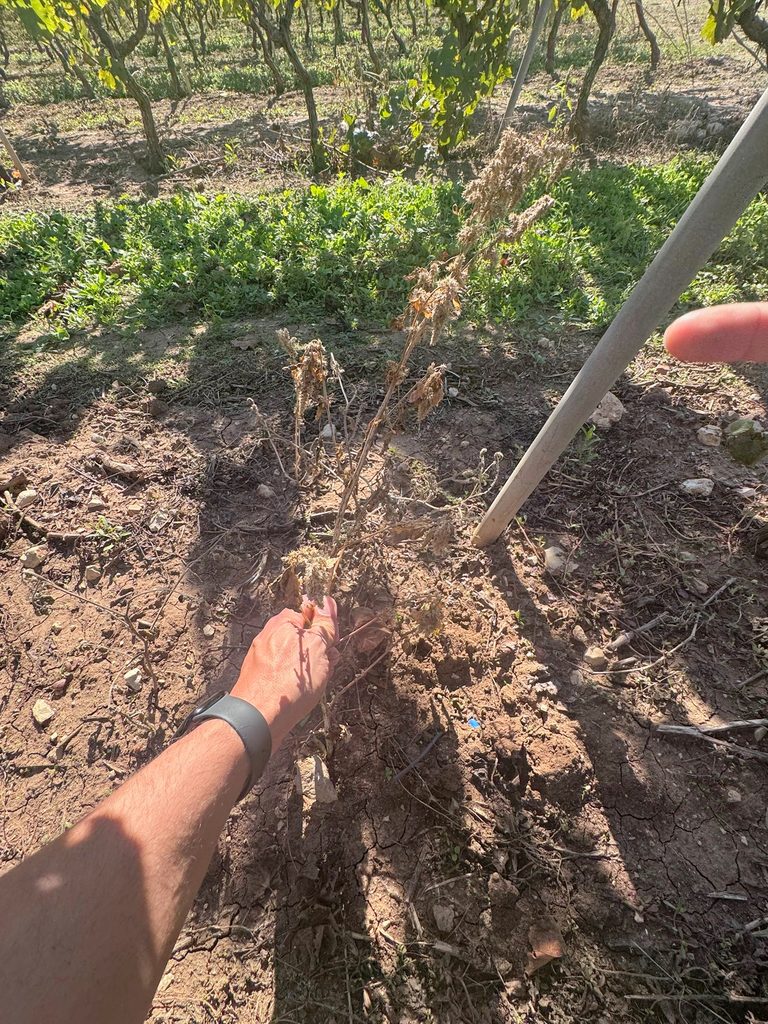
This matters because herbicide resistance is not a theoretical problem. Italy’s National Research Council (CNR) has documented glyphosate-resistant ryegrass (Lolium rigidum) in vineyards in northern Italy, populations that survived the registered field rates. Electric weeding works on a different principle. It does not target a biochemical pathway, so a weed’s resistance to herbicides does not change what the current does to it. In the field, the practical result is fewer weeding passes per year than with mechanical weeding and, with continued use, less regrowth in treated areas: a gain in both efficiency and cost savings.
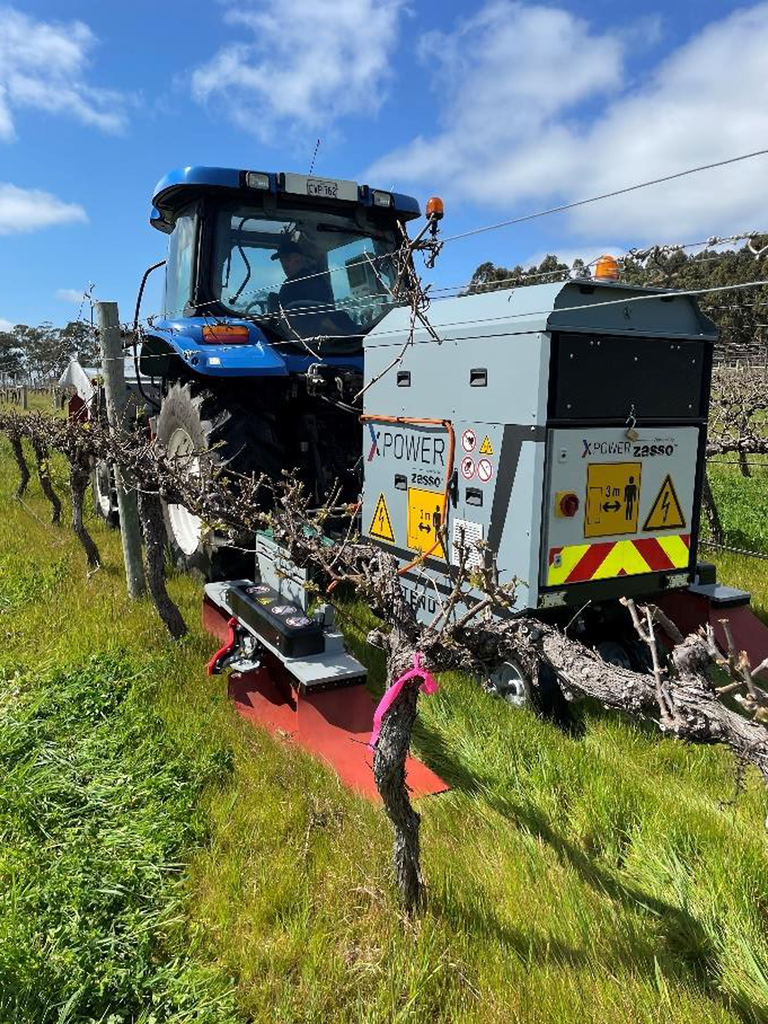
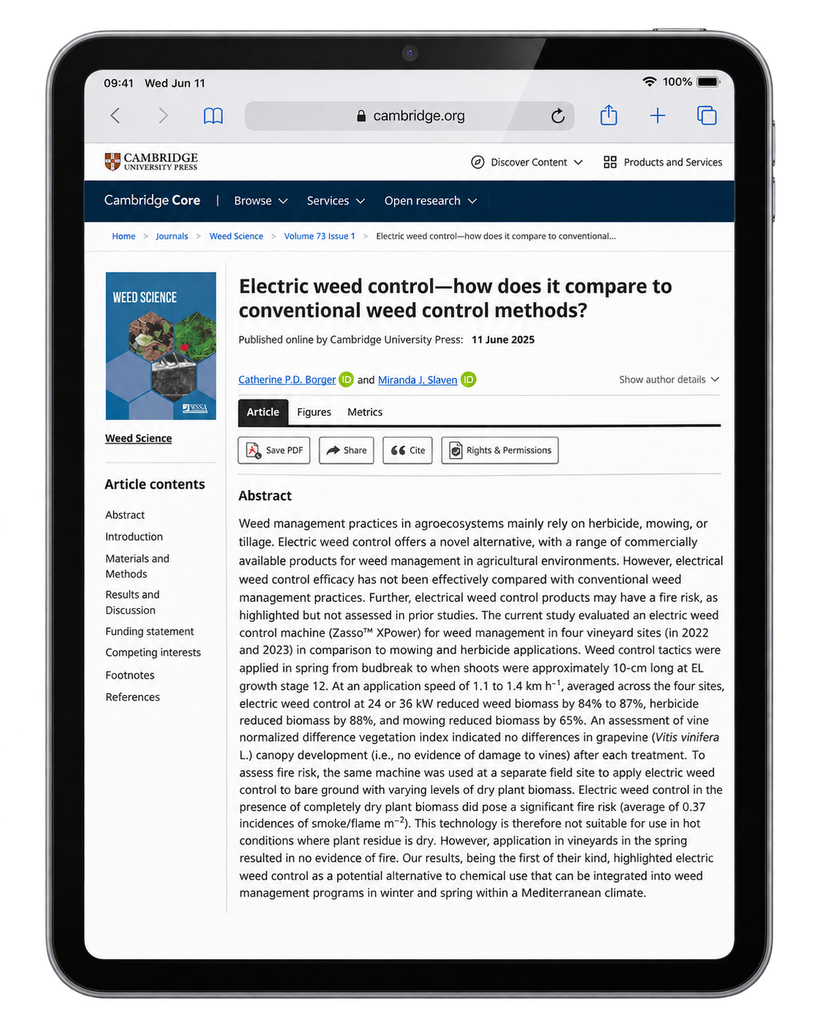
Peer-reviewed research confirms its efficacy. In a Weed Science study on electric weed control researchers from Western Australia’s Department of Primary Industries and Regional Development (DPIRD) tested four vineyard sites in a Mediterranean climate. In spring applications, the XPower with the XPS applicator, powered by Zasso, reduced weed biomass by 84% to 87%, compared with 88% for herbicide and 65% for mowing.
Herbicides have limits of their own. Resistance narrows the options when the same mode of action is used year after year. Regulation adds uncertainty: the EU renewed glyphosate’s approval until December 15, 2033, with new conditions, while each member state still decides which products are authorized on its soil. And in a vineyard, the spraying window is tight. Grapevines are highly sensitive to drift from certain herbicide classes, wind and temperature determine when it is safe to apply, and in a woody perennial crop the damage can weaken the vine for several seasons.
Mechanical weeding has its own cost. Under-vine tools have to work between trunks and posts, usually with sensor arms that retract on contact, so the risk of trunk and root injury never disappears, and irrigation risers and drip lines are exposed to damage. Drip irrigation feeds weeds exactly in line with the trunks, where mechanical tools struggle most, so more irrigation often means more passes. Tillage can disturb soil structure and increase erosion, stones wear and damage implements, and clay soils limit when machines can work.
Every vineyard has its own weeds, soils and calendar, and no single tool works in every case. That is why seeing electric weeding in action on your own rows matters.
If you manage vineyards and want to know what the XPS electric weeding system, powered by Zasso, could do for your weed management program, send us a message.
Visit www.zasso.com or write to contact@zasso.com, and let’s schedule a conversation.